Drill presses‚ essential for precise hole creation‚ are detailed in manuals covering operation‚ safety‚ and maintenance․ These guides ensure accurate drilling across various materials․
What is a Drill Press?
A drill press is a stationary power tool used for creating precise‚ consistent holes in a variety of materials – wood‚ metal‚ plastic‚ and more․ Unlike handheld drills‚ drill presses offer greater accuracy and control‚ making them ideal for repetitive tasks․ Drill press manuals emphasize this precision‚ detailing how to properly secure workpieces and utilize features like adjustable speed and depth stops․ They are fundamentally designed for perpendicular hole creation‚ though some models offer angle adjustments․ Understanding the manual is crucial for safe and effective operation‚ ensuring longevity of the tool and quality of work․
Types of Drill Presses (Bench‚ Floor‚ Radial)
Drill press manuals categorize these tools into three main types: bench‚ floor‚ and radial․ Bench drill presses are compact‚ mounted on a workbench‚ suitable for smaller projects․ Floor drill presses‚ larger and more powerful‚ stand independently‚ ideal for thicker materials․ Radial drill presses feature a head that moves along arms‚ offering versatility for large workpieces․ Manuals detail the specific setup and operational procedures for each type‚ highlighting weight capacities and recommended applications․ Choosing the right type‚ as explained in the manual‚ depends on project scale and frequency of use․
Key Components of a Drill Press
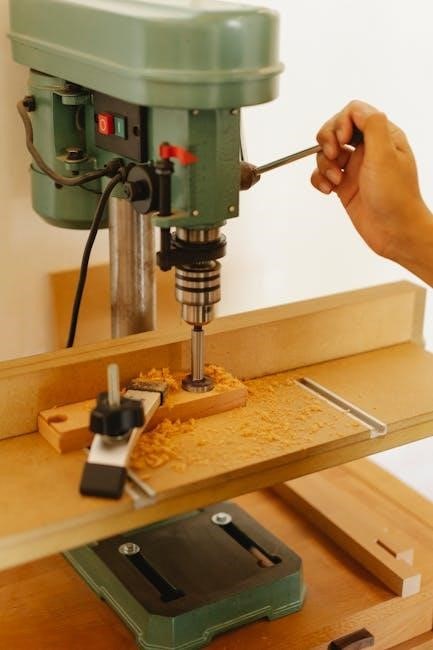
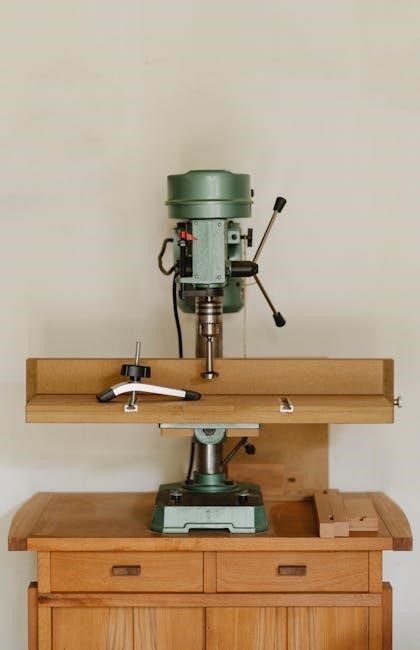
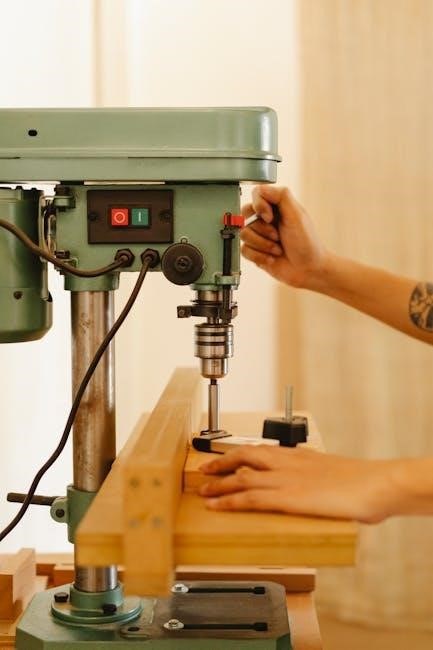
Drill press manuals meticulously detail each component․ The base provides stability‚ while the column supports the head․ The head houses the motor and spindle․ The spindle rotates and holds the chuck‚ securing the drill bit․ Manuals emphasize proper chuck key usage․ The table supports the workpiece‚ adjustable for height and angle․ Speed controls regulate drilling speed․ Understanding these components‚ as outlined in the manual‚ is crucial for safe and effective operation and maintenance․
Safety Precautions
Drill press manuals prioritize safety‚ detailing PPE requirements and safe operating procedures to prevent injuries․ Always read and understand these crucial guidelines․
Personal Protective Equipment (PPE)
Drill press manuals consistently emphasize the necessity of appropriate Personal Protective Equipment (PPE)․ Safety glasses or a face shield are paramount‚ safeguarding eyes from flying debris generated during drilling operations․ Close-fitting clothing is crucial; avoid loose garments that could become entangled in the rotating machinery․
Securely tie back long hair to prevent it from being caught․ Manuals often recommend wearing gloves to improve grip and protect hands‚ though caution is advised to avoid entanglement․ Sturdy‚ closed-toe shoes are essential for foot protection․ Understanding and adhering to these PPE guidelines‚ as outlined in the manual‚ significantly minimizes the risk of workplace injuries․
Safe Operating Procedures
Drill press manuals detail crucial safe operating procedures․ Always secure the workpiece with a clamp or vise before drilling – never hold it by hand․ Ensure the drill bit is securely fastened in the chuck and properly aligned․ Before starting‚ verify the speed setting is appropriate for the material being drilled․
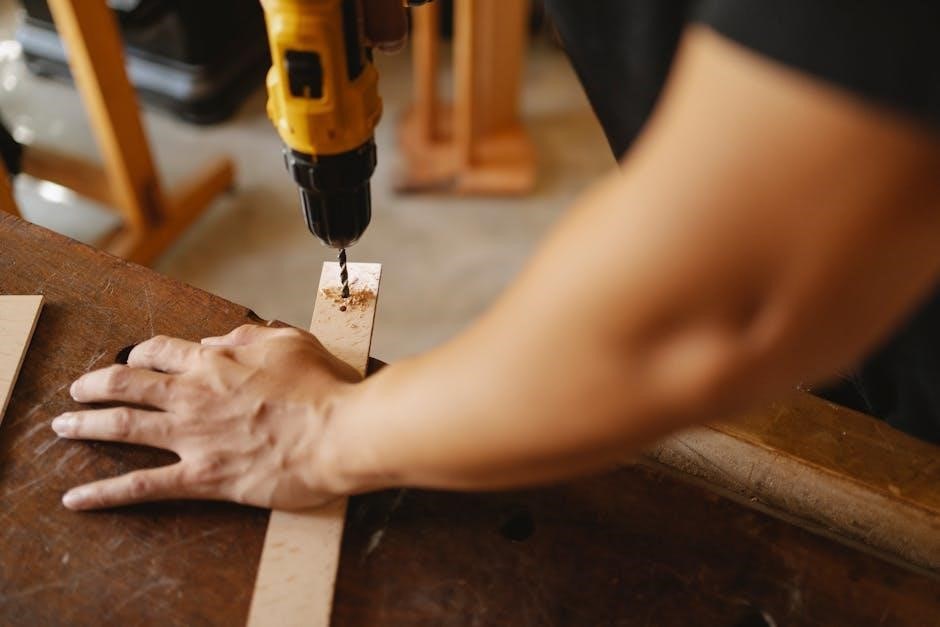
Maintain a firm grip and controlled feed rate․ Avoid excessive force‚ letting the drill do the work․ Keep hands clear of the rotating bit and moving parts․ Refer to the manual for specific procedures regarding bit changes and machine adjustments to ensure safe operation․
Emergency Stop Procedures
Drill press manuals prominently feature emergency stop procedures for immediate hazard control․ Locate and understand the function of the emergency stop button – typically a large‚ red mushroom-shaped button – before operation․ In any unsafe situation‚ immediately depress this button to halt all machine movement․
Additionally‚ familiarize yourself with the power switch location for a controlled shutdown․ Never attempt to override safety features․ Following an emergency stop‚ investigate the cause before restarting‚ ensuring all conditions are safe․ Consult the manual for detailed troubleshooting steps․
Understanding Drill Press Features
Drill press manuals detail features like chucks‚ speed controls‚ and depth stops‚ explaining their functions for optimal performance and precision during drilling operations․
Chuck and Chuck Key
Drill press manuals emphasize the chuck’s role in securely holding drill bits․ They detail various chuck types – keyed and keyless – and proper bit insertion/removal techniques․ Always remove the chuck key immediately after tightening or loosening a bit! Manuals illustrate correct key insertion points and warn against forcing the key‚ which can damage the chuck․
They also explain how to check for chuck runout‚ ensuring accurate drilling․ Proper chuck maintenance‚ including cleaning and occasional lubrication‚ is also covered to prolong its lifespan and maintain precision․ Ignoring these instructions can lead to bit slippage and potential injury․
Speed Control and Settings
Drill press manuals dedicate significant space to speed control‚ explaining the relationship between spindle speed (RPM) and material type․ Lower speeds are recommended for harder materials like metal‚ while higher speeds suit softer materials like wood․ Manuals often include charts correlating material and bit size to optimal speed settings․
They detail how to adjust speed via belt changes or electronic controls‚ emphasizing safety precautions during belt adjustments․ Incorrect speed selection can damage bits‚ ruin workpieces‚ and pose a safety hazard․ Understanding these settings is crucial for efficient and accurate drilling․
Depth Stop Mechanism
Drill press manuals thoroughly explain the depth stop mechanism‚ a vital feature for consistent hole depths․ They illustrate how to adjust the stop‚ often using a scale or locking collar‚ to limit the drill’s travel․ Proper adjustment prevents drilling through the workpiece and damaging the drill table․
Manuals emphasize the importance of precise setup and testing before drilling․ They may include diagrams showing different depth stop configurations․ Utilizing this feature ensures repeatable results‚ particularly in production runs‚ and enhances overall drilling accuracy․
Drill Bit Selection
Drill press manuals guide users in selecting appropriate bits for materials like wood‚ metal‚ and plastic‚ ensuring optimal performance and preventing damage․
Types of Drill Bits (Twist‚ Spade‚ Forstner)
Drill press manuals thoroughly explain different bit types․ Twist bits are versatile for general-purpose drilling in wood and metal․ Spade bits create larger diameter holes quickly in wood‚ but with less precision․ Forstner bits produce clean‚ flat-bottomed holes‚ ideal for woodworking projects requiring accuracy․
Manuals detail each bit’s specific applications‚ recommended speeds‚ and proper usage techniques․ Understanding these differences‚ as outlined in the manual‚ is crucial for achieving desired results and maximizing bit lifespan․ Choosing the correct bit prevents material damage and ensures safe operation․
Material Compatibility and Bit Choice
Drill press manuals emphasize matching bits to materials․ Wood requires wood-specific bits like Forstner or spade bits‚ while metal demands high-speed steel (HSS) or cobalt twist bits․ Plastics often benefit from specialized plastic-cutting bits to prevent melting or cracking․
Manuals provide detailed charts outlining optimal bit selections for various materials‚ alongside recommended speeds and feed rates․ Incorrect bit choice leads to poor hole quality‚ bit damage‚ and potential safety hazards․ Always consult the manual before starting a project․
Drill Bit Sharpening
Drill press manuals often dedicate sections to bit sharpening‚ crucial for maintaining drilling performance․ Dull bits require excessive force‚ creating inaccurate holes and increasing the risk of kickback․ Manuals detail sharpening angles specific to each bit type – twist‚ spade‚ or Forstner․
They may recommend using a drill bit sharpener or a bench grinder with appropriate attachments․ Proper sharpening restores the bit’s cutting edge‚ ensuring clean‚ efficient drilling and extending its lifespan․ Ignoring sharpening compromises safety and quality․
Setting Up the Drill Press
Drill press manuals emphasize secure workpiece clamping‚ proper table adjustment‚ and adequate lighting for safe and accurate operation․ These steps are fundamental․
Workpiece Clamping and Securing
Drill press manuals consistently prioritize secure workpiece clamping to prevent dangerous movement during operation․ Utilizing vices‚ clamps‚ or step blocks is crucial for stability․ Never hold material by hand! Manuals detail appropriate clamping force – sufficient to hold‚ but not damage‚ the material․
Proper securing minimizes vibration‚ ensuring accurate drilling and preventing potential kickback․ The manual will illustrate correct vice alignment and clamping techniques for various shapes and sizes․ Always double-check the setup before activating the drill press‚ referencing the manual’s safety guidelines․
Adjusting Table Height and Angle
Drill press manuals provide detailed instructions for table adjustment‚ vital for versatile drilling․ Loosen the locking mechanism before raising or lowering the table to the desired height‚ then securely re-tighten it․ Angle adjustments‚ often using a rack and pinion system‚ allow for angled drilling․
Manuals emphasize checking the table’s squareness to the drill bit after any adjustment․ Proper alignment ensures accurate hole placement․ Always re-secure locking levers firmly before commencing drilling operations‚ referencing the manual’s diagrams for correct procedure․
Proper Lighting and Workspace Setup
Drill press manuals consistently highlight the importance of a well-lit and organized workspace; Adequate illumination is crucial for clear visibility of the workpiece and drill bit‚ preventing errors and accidents․ Ensure the work area is free from clutter‚ tools‚ and obstructions․
Manuals recommend sufficient space around the drill press for safe operation and material handling․ A clean‚ dedicated workspace minimizes distractions and promotes focus‚ contributing to accurate and efficient drilling․ Proper ventilation is also often advised․

Drilling Techniques
Drill press manuals emphasize center punching for accurate starts‚ consistent pressure‚ and proper speed selection for various materials‚ ensuring clean‚ precise holes․
Starting a Hole (Center Punching)
Drill press manuals consistently highlight the critical importance of center punching before initiating any drilling operation․ This foundational step establishes a precise starting point‚ preventing the drill bit from “walking” or wandering off-center․ A sharp center punch creates a small indentation‚ guiding the bit directly into the desired location․
Manuals detail using a controlled hammer strike to create this indentation‚ emphasizing safety glasses for protection․ Proper center punching significantly improves hole accuracy‚ especially when working with metal or hard materials‚ and minimizes potential damage to the workpiece or drill bit․ Ignoring this step often leads to inaccurate results and increased wear․
Drilling Straight and Accurate Holes
Drill press manuals emphasize maintaining a consistent feed rate as crucial for achieving straight‚ accurate holes․ Avoid excessive force‚ allowing the bit to gradually cut through the material․ Manuals advise a slow‚ steady descent‚ particularly when starting and finishing the cut․
Proper workpiece clamping is also highlighted; a securely fastened piece prevents movement during drilling․ Regularly checking the drill press table’s alignment and ensuring the bit is perpendicular to the surface are vital steps․ Following these guidelines‚ detailed in most manuals‚ guarantees precision and minimizes errors․
Drilling Different Materials (Wood‚ Metal‚ Plastic)
Drill press manuals detail specific techniques for various materials․ For wood‚ higher speeds and sharp bits are recommended‚ while metal requires slower speeds and cutting oil to prevent overheating․ Plastic necessitates even slower speeds to avoid melting or cracking․
Manuals also emphasize selecting the correct drill bit type for each material – twist bits for metal‚ brad point bits for wood‚ and specialized bits for plastic․ Adjusting the speed and feed rate according to the material’s properties‚ as outlined in the manual‚ is key to optimal results․

Advanced Drilling Operations
Drill press manuals guide users through complex tasks like countersinking‚ counterboring‚ and reaming‚ emphasizing proper setup and bit selection for precision․
Countersinking and Counterboring
Drill press manuals thoroughly explain countersinking and counterboring‚ vital for creating recesses for screw heads․ Countersinking uses angled guides to create a conical shape‚ allowing flush screw seating․ Manuals detail selecting the correct countersink bit angle to match the screw head․ Counterboring‚ conversely‚ creates a flat-bottomed recess․
These guides emphasize slow speeds and firm pressure for clean results‚ preventing tear-out‚ especially in wood․ Manuals also caution against excessive feed rates‚ which can damage the workpiece or the bit; Proper bit alignment and secure workpiece clamping are consistently highlighted for safety and accuracy․
Tapered Holes and Reaming
Drill press manuals detail creating tapered holes using specialized tapered reamers or by carefully angling a standard drill bit․ Manuals stress the importance of consistent feed pressure and speed control for uniform taper․ Reaming‚ explained within‚ precisely enlarges existing holes to a specific size․
Guides emphasize using cutting oil during reaming to reduce friction and improve surface finish․ Manuals caution against forcing the reamer‚ advocating for smooth‚ controlled rotation․ Proper hole alignment and secure workpiece clamping are crucial for accurate tapered holes and reamed finishes․
Using Drill Press Vises and Fixtures
Drill press manuals thoroughly cover utilizing vises and fixtures for secure workpiece holding․ They detail selecting the appropriate vise – drill press‚ milling‚ or machinist – based on the part’s shape and size․ Manuals emphasize tightening vises firmly to prevent movement during drilling‚ ensuring accuracy and safety․
Custom fixtures‚ often detailed with diagrams‚ are presented for complex parts․ Guides stress proper alignment of the vise or fixture to the drill bit․ Manuals warn against over-tightening‚ which can damage the workpiece or vise jaws․
Drill Press Maintenance
Drill press manuals outline routine maintenance: lubrication‚ belt checks‚ and cleaning․ Following these steps ensures optimal performance and extends the drill press’s lifespan considerably․
Lubrication and Cleaning
Drill press manuals emphasize regular lubrication of moving parts – quill‚ bearings‚ and gears – using appropriate oil․ This minimizes friction and wear‚ ensuring smooth operation․ Cleaning is equally vital; remove chips and debris after each use to prevent binding and maintain accuracy․ A thorough cleaning schedule‚ detailed in the manual‚ should include wiping down the entire machine and inspecting for any signs of damage or loose components․ Ignoring these steps can lead to premature failure and compromise drilling precision․ Always disconnect power before performing any maintenance!
Belt Inspection and Replacement
Drill press manuals detail belt inspection procedures‚ advising checks for cracks‚ fraying‚ or excessive wear․ A damaged belt compromises speed control and power transfer․ Replacement instructions outline proper tensioning – too loose causes slippage‚ too tight strains the motor․ Manuals specify correct belt types based on drill press model and desired speed ranges․ Always disconnect power before belt work! Proper installation‚ following the manual’s diagrams‚ is crucial for safe and efficient operation‚ preventing premature failure and maintaining drilling accuracy․
Troubleshooting Common Issues
Drill press manuals provide systematic troubleshooting guides for frequent problems․ These include addressing excessive vibration (check mounting & balance)‚ inaccurate drilling (verify setup & bit sharpness)‚ and motor issues (inspect power supply & belts)․ Manuals detail solutions like tightening bolts‚ recalibrating depth stops‚ or replacing worn parts․ They emphasize safety – always disconnect power before internal inspection․ Following these steps minimizes downtime and ensures continued‚ safe operation‚ preventing further damage and costly repairs․

Drill File Generation (PCB context)
Drill press manuals aren’t directly related to PCB drill file creation; however‚ understanding precision drilling principles aids in generating accurate manufacturing files․
Allegro PCB Drill File Creation
While a drill press manual doesn’t directly guide Allegro PCB drill file generation‚ the core principle of precise hole placement remains paramount․ Allegro utilizes design data to create Excellon format drill files‚ crucial for PCB manufacturing․ These files detail hole sizes‚ locations‚ and quantities․ Understanding drill bit selection – a concept covered in drill press guides – informs appropriate drill size specifications within Allegro․ Accurate drill file creation minimizes manufacturing errors‚ ensuring board functionality․ Proper setup and verification within Allegro‚ mirroring careful drill press operation‚ are essential for successful PCB production․ Ignoring these details can lead to costly rework or board failure․
Drill File Format Standards (Excellon)
Though seemingly distant from a drill press manual‚ the precision demanded in both realms is strikingly similar․ Excellon is the dominant standard for drill files used in PCB manufacturing‚ dictating how hole data is formatted․ Like selecting the correct drill bit for a specific material – detailed in manuals – Excellon defines parameters like tool numbers‚ hole sizes‚ and coordinates․ Adherence to this standard ensures compatibility with automated drilling machines․ Incorrect formatting‚ mirroring improper drill press setup‚ results in manufacturing errors․ Understanding Excellon’s structure is vital for accurate PCB production and reliable performance․
Importance of Accurate Drill Files for Manufacturing
Just as a drill press manual emphasizes precise setup‚ accurate drill files are paramount in PCB manufacturing․ Errors in these files – mirroring incorrect speed settings or workpiece clamping – lead to misaligned holes‚ potentially rendering boards unusable․ Manufacturing tolerances are tight; even minor deviations can cause component failures․ A reliable drill file‚ like a well-maintained drill press‚ guarantees consistent quality․ Verification processes‚ akin to pre-drilling checks‚ are crucial․ Accurate files minimize waste‚ reduce rework‚ and ensure the final product meets stringent specifications․
Drill Music Genre (Brief Mention ⎼ Contextual)
Interestingly‚ “drill” also denotes a music genre originating in Chicago‚ characterized by dark lyrics and intense beats – a stark contrast to a drill press manual’s focus․
Origins of Drill Music (Chicago)
While seemingly unrelated‚ the term “drill” finds a separate origin in the music scene of Chicago․ Emerging around 2010‚ this subgenre of hip-hop reflected the city’s violent realities‚ earning its name as a reference to “drilling” – street slang for initiating violent acts․
This contrasts sharply with the precision and controlled operation detailed within a drill press manual․ The musical style‚ characterized by dark‚ minimalist beats and often graphic lyrics‚ stands as a cultural phenomenon distinct from the mechanical function of a drill press․ Understanding this duality highlights the varied meanings embedded within a single word․
Characteristics of Drill Music (Beat Structure)
The sonic landscape of drill music‚ though distinct from the mechanical hum of a drill press‚ shares a common element: precision․ Drill beats are defined by their sparse‚ dark arrangements‚ typically featuring a slow tempo‚ heavy 808 basslines‚ and rapid-fire hi-hat patterns․
Similar to the careful setup and controlled operation outlined in a drill press manual‚ drill production demands meticulous attention to detail․ The irregular hi-hats and sliding 808s create a tense‚ unsettling atmosphere‚ a far cry from the focused functionality of a workshop tool․
UK Drill and its Evolution
Just as drill press technology has evolved‚ so too has UK Drill music․ Originating from Chicago‚ the genre found new life in the UK‚ incorporating unique melodic elements and a darker‚ more aggressive sound․ This evolution mirrors the advancements in drill press design – from basic benchtop models to sophisticated radial arm machines․
A drill press manual guides users through these complexities‚ much like understanding the nuances of UK Drill requires attentive listening․ Both demand a grasp of underlying principles and adaptation to changing techniques‚ ensuring optimal performance and results․