Table Saw Guide Rollers: A Comprehensive Guide (Updated 12/21/2025)
Today’s date is 12/21/2025! This guide explores stock guide rollers, enhancing table saw safety and precision. These rollers reduce kickback, offering smoother material feed for various cuts.
Table saw guide rollers represent a significant advancement in woodworking safety and accuracy; These innovative tools, updated as of December 21, 2025, are designed to minimize the risk of dangerous kickback while simultaneously improving the quality of cuts. They function by providing a consistent, controlled feed of material through the saw blade.
Modern woodworking demands precision, and guide rollers deliver. They are compatible with various saws, including band saws and router tables, expanding their utility beyond the traditional table saw. Understanding their benefits is crucial for any woodworker seeking enhanced control and safety.
What are Table Saw Guide Rollers?
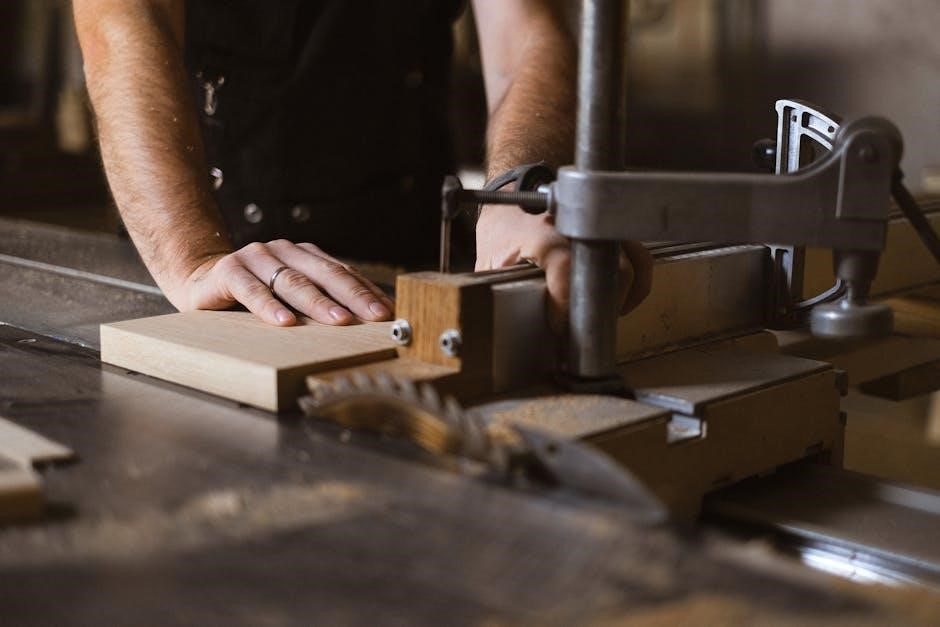
Table saw guide rollers are auxiliary devices attached to a table saw, functioning as a feeder to restrict material movement. They utilize rollers – often rubber or polyurethane – to firmly press workpieces against the fence, ensuring precise and consistent cuts. These systems are designed to counteract the forces that can lead to kickback, a major safety concern.

Essentially, they transform the feeding action into a smoother, more controlled process. They aren’t replacements for proper technique, but valuable additions for both DIY enthusiasts and professional woodworkers seeking improved results.
The Primary Function of Stock Guide Rollers
The core function of stock guide rollers is to minimize the risk of kickback during table saw operations. They achieve this by providing consistent downward and inward pressure on the workpiece, maintaining contact with both the fence and the table. This controlled feed prevents the wood from lifting or wandering, which are primary causes of kickback.
Furthermore, these rollers enhance cut accuracy by stabilizing the material, leading to cleaner, more precise results. They essentially act as a secondary support system, improving overall control.

Types of Table Saw Guide Rollers
Table saw guide rollers come in one-way and two-way designs, with RG-1 and RG-2 models offering versatility for table saws, bandsaws, and routers.
One-Way Roller Guides
One-way roller guides are incredibly adaptable, functioning effectively on table saws, band saws, and router tables. They serve as a substitute for traditional featherboards in numerous cutting scenarios. These guides excel at maintaining consistent pressure on the workpiece, ensuring a smooth and controlled feed.
Their design allows for use in any situation where a standard featherboard would typically be employed, providing a reliable alternative. They are particularly useful for preventing material from lifting or twisting during the cut, contributing to increased accuracy and safety.
Two-Way Roller Guides
Two-way roller guides offer a versatile solution for maintaining consistent pressure on stock during various woodworking operations. While less common than one-way designs, they provide support from both sides of the workpiece. This bi-directional support enhances stability, particularly beneficial when ripping wider boards or dealing with materials prone to warping.
These guides are adaptable for use with table saws, band saws, and router tables, offering a robust alternative to featherboards. They contribute to smoother cuts and improved operator control, enhancing overall precision and safety.
RG-1 and RG-2 Roller Guides: Versatility in Cutting
RG-1 and RG-2 Roller Guides stand out for their adaptability across multiple tools. These guides aren’t limited to table saws; they excel on band saws, router tables, and even shaper machines, providing consistent material control. This versatility makes them a valuable addition to any woodworking shop.
They facilitate precise cuttings in diverse applications, offering a reliable solution for both hobbyists and professionals. Their design ensures smooth material flow, enhancing cut quality and minimizing the risk of errors.

Benefits of Using Table Saw Guide Rollers
Guide rollers significantly boost safety by reducing kickback risk, improving cut accuracy, and ensuring a smoother material feed for enhanced woodworking precision.
Enhanced Safety: Reducing Kickback Risk
Table saw guide rollers are pivotal in mitigating the dangerous phenomenon of kickback. By firmly controlling the workpiece, these rollers prevent binding between the blade and the wood. This consistent pressure minimizes the chance of the material being violently thrown back towards the operator.
The adjustable nature of these guides allows for precise control, further enhancing safety. Utilizing a one-way bearing stock feeder also contributes to a safer shop environment, offering peace of mind during operation. Prioritizing safety is paramount when using power tools!
Improved Cut Accuracy and Precision
Table saw guide rollers significantly elevate cut accuracy by maintaining consistent contact with the workpiece. This steady support eliminates wandering and ensures the wood travels in a straight line, resulting in cleaner, more precise cuts. Micro-adjustments on these guides allow for fine-tuning, catering to diverse materials and cutting requirements.
The tight press of the rubber rollers against the workpiece guarantees stability, minimizing deviations. Achieving precise measurements becomes easier, improving overall project quality and reducing material waste.
Smoother Material Feed
Table saw guide rollers facilitate remarkably smoother material feed compared to traditional methods. The rolling action minimizes friction, allowing wood to glide effortlessly along the blade. This is particularly beneficial when working with larger or heavier stock, reducing operator fatigue and enhancing control.
Consistent feed rates contribute to a cleaner cut edge and prevent binding, which can lead to kickback. The rollers’ ability to maintain even pressure ensures a stable and predictable cutting process.

Installation and Adjustment
Guide roller installation requires compatibility with mitre slots – plain or T-slots. Proper adjustment is crucial for smooth movement and optimal performance, ensuring precise cuts.
Compatibility with Mitre Slots (Plain & T-Slots)
Mitre slots are essential for guide roller installation, existing in two primary styles: plain and T-slots. Plain slots offer a basic mounting point, while T-slots provide enhanced versatility. The T-slot design allows for hardware clamping, securing the guide system firmly in place.
This clamping ability is crucial for maintaining consistent pressure and preventing unwanted movement during operation. Ensure your chosen guide roller system is compatible with your table saw’s existing mitre slot configuration for a secure and effective setup.
Proper Roller Adjustment Techniques
Precise adjustment is key to maximizing the benefits of table saw guide rollers. Micro-adjustments are vital for achieving optimal performance, ensuring the rollers maintain consistent contact with the workpiece. This prevents binding and ensures a smooth, controlled feed rate.
Adjust the rollers to apply gentle, even pressure, avoiding excessive force that could hinder movement. Regularly check and readjust as needed, especially when changing material thickness or cut type, for consistently accurate results.
Ensuring Smooth Roller Movement
Maintaining free roller rotation is crucial for effective stock control. Regularly clean the rollers and their housings to remove sawdust and debris that can cause sticking or impede movement. Lubrication with a suitable product minimizes friction, promoting effortless material feed.
Inspect bearings for wear and replace them if necessary. A smooth, consistent roll prevents binding and ensures accurate cuts, contributing to overall safety and precision during operation.
Applications Beyond the Table Saw
Versatile guide rollers extend beyond table saws! They’re beneficial with band saws, router tables, and shapers, providing consistent material control and enhanced cutting accuracy.
Use with Band Saws
Table saw guide rollers seamlessly integrate with band saws, significantly improving the quality and safety of curved and resaw cuts. Utilizing a one-way roller guide on a band saw minimizes blade wander, ensuring straighter lines and reducing the risk of binding.
This is particularly useful when cutting thicker stock or navigating complex curves. The consistent pressure provided by the roller supports the workpiece, preventing it from drifting and contributing to a cleaner, more precise finish. They offer a stable feed, enhancing overall control.
Applications on Router Tables
Table saw guide rollers extend their utility to router tables, providing enhanced control during edge profiling and pattern routing operations. Employing a roller guide ensures consistent pressure against the fence or template, resulting in smoother, more accurate cuts.
This is especially beneficial when working with hardwoods or intricate designs. The roller minimizes tear-out and prevents the workpiece from lifting, leading to a cleaner edge. They are adaptable for all situations where featherboards are typically used.
Integration with Shaper Machines
Table saw guide rollers demonstrate remarkable versatility by seamlessly integrating with shaper machines, offering superior control during complex molding and profiling tasks. Utilizing these rollers ensures consistent material feed, minimizing tear-out and enhancing the precision of intricate cuts.
The RG-1 and RG-2 roller guides are particularly well-suited for shaper applications, providing stability and reducing the risk of workpiece deflection. This leads to cleaner, more accurate profiles, even with challenging wood species.

Materials and Construction
Guide rollers utilize rubber or polyurethane for smooth operation. Bearing types include one-way and standard options, housed in durable frames – ensuring longevity and performance.
Roller Material Options (Rubber, Polyurethane, etc.)
Selecting the right roller material significantly impacts performance. Rubber rollers offer excellent grip and are cost-effective, ideal for general-purpose use. However, polyurethane provides superior durability and resistance to wear and tear, making it a preferred choice for high-volume cutting or abrasive materials.
Other materials, though less common, include specialized polymers designed for specific applications. The material’s hardness (durometer) also plays a crucial role; softer materials conform better to workpieces, while harder materials maintain shape longer. Ultimately, the best material depends on the intended use and budget.
Bearing Types: One-Way vs. Standard
Bearing selection is critical for smooth operation. Standard bearings offer consistent support but can sometimes bind during directional changes. One-way bearings, however, are designed for unidirectional movement, minimizing friction and enhancing feed smoothness.
These are particularly beneficial for preventing kickback, as they allow the workpiece to move freely in the cutting direction while resisting movement backwards. POWERTEC utilizes one-way bearings for increased shop safety and precision. Choosing the right bearing type depends on the application and desired level of control.
Frame and Housing Materials
Durable construction is essential for long-lasting performance. Guide roller frames and housings are commonly crafted from materials like aluminum, steel, or high-impact polymers. Aluminum offers a lightweight yet robust solution, resisting corrosion. Steel provides exceptional strength and stability for demanding applications.
Polymer housings offer cost-effectiveness and vibration dampening. The choice depends on the intended use and budget. Quality materials ensure the roller maintains precise alignment and withstands the rigors of woodworking, contributing to safer and more accurate cuts.

Top Brands and Models
POWERTEC stands out with its adjustable roller stock guide, designed to minimize kickback and boost shop safety across table saws and more!
POWERTEC Adjustable Roller Stock Guide
POWERTEC’s Adjustable Roller Stock Guide is a highly-regarded tool for woodworkers seeking enhanced safety and precision. This guide utilizes a one-way bearing system, effectively reducing the risk of dangerous kickback during table saw operations.
Micro-adjustments allow for customized control, ensuring a snug fit for various workpiece sizes. It’s not limited to table saws; this versatile guide is also compatible with router tables and band saws, expanding its utility within the workshop. It’s designed to increase shop safety and improve cut quality.
Review of Popular Roller Guide Options
Several roller guide options cater to diverse woodworking needs. Beyond POWERTEC, brands offer varying features like dual-roller systems for increased stability and quick-adjust mechanisms for efficiency. One-way roller guides excel in preventing kickback, while two-way options suit broader applications;
RG-1 and RG-2 guides stand out for their versatility across table saws, band saws, and router tables. User reviews frequently highlight improved cut accuracy and smoother material feed as key benefits. Choosing the right guide depends on your specific cutting tasks and budget.
Maintenance and Troubleshooting
Regular cleaning and lubrication are vital for optimal performance. Address sticking or noise promptly; extending lifespan requires consistent care and inspection of the rollers.
Cleaning and Lubrication
Maintaining your table saw guide rollers is crucial for longevity and performance. Regularly remove sawdust and debris with a brush or compressed air, preventing buildup that causes friction. Apply a silicone-based lubricant to the roller bearings and surfaces, ensuring smooth movement.
Avoid oil-based lubricants, as they attract dust. Inspect rollers frequently for wear and tear, and re-lubricate as needed. Proper cleaning and lubrication minimize sticking, reduce noise, and contribute to safer, more accurate cuts, ultimately extending the lifespan of your guide rollers.
Addressing Common Issues (Sticking, Noise)
Sticking rollers often indicate accumulated sawdust or dried lubricant. Thorough cleaning and re-lubrication with silicone spray usually resolve this. Excessive noise can stem from worn bearings or improper adjustment. Check for play in the rollers and tighten if necessary.
If noise persists, bearing replacement might be required. Ensure the guide rollers are correctly aligned and aren’t binding against the workpiece. Regular inspection and prompt attention to these issues maintain optimal performance and prevent further damage.
Extending the Lifespan of Your Guide Rollers
Regular cleaning is paramount; remove sawdust after each use to prevent buildup and friction. Consistent lubrication with silicone spray keeps rollers moving smoothly, reducing wear. Inspect bearings periodically for signs of corrosion or damage, replacing them proactively.
Avoid excessive force when guiding material, as this strains the rollers. Store rollers in a dry environment to prevent rust. Proper maintenance ensures longevity, maximizing your investment and maintaining safe, accurate cuts.
Guide Roller Systems vs. Traditional Featherboards
Guide rollers and featherboards both control stock, but rollers offer consistent pressure and reduced friction. Rollers excel with varying stock widths, enhancing safety and precision.
Comparing and Contrasting Approaches
Traditional featherboards utilize angled fingers to apply pressure, relying on friction to maintain stock alignment during cuts. While effective, their performance can diminish with warped or uneven material. Guide roller systems, conversely, employ rolling action, providing consistent and adjustable pressure regardless of stock condition.
Rollers minimize friction, leading to smoother feeds and reduced risk of binding. Featherboards require more frequent adjustments for optimal performance, whereas roller guides offer micro-adjustments for precise control. Ultimately, the choice depends on the user’s needs and the types of cuts frequently performed.
When to Choose a Guide Roller System
Opt for a guide roller system when prioritizing safety and precision, especially with potentially hazardous cuts. They excel at reducing kickback, a critical concern for all woodworkers. If you frequently work with hardwoods, thick stock, or materials prone to warping, rollers provide superior control.
Consider a roller guide if you desire smoother material feed and micro-adjustment capabilities. They are also beneficial for use beyond the table saw – on band saws, router tables, and shapers – offering versatility and consistent performance across multiple tools;
Cost Considerations
Roller prices vary, ranging from affordable options to premium models. Balancing cost and performance is key; value depends on features and intended application needs.
Price Range for Different Types of Rollers
The cost of table saw guide rollers fluctuates based on features and quality. Basic, one-way roller guides typically range from $30 to $60, offering a cost-effective solution for smaller shops. More advanced two-way roller guides, providing versatility, generally fall between $60 and $120.
Premium options, like the POWERTEC Adjustable Roller Stock Guide, can exceed $150, incorporating features like micro-adjustments and superior bearing quality. RG-1 and RG-2 style guides often sit in the $80-$140 range. Consider your cutting needs and budget when selecting the appropriate roller system.
Value for Money: Balancing Cost and Performance
Determining value in table saw guide rollers requires balancing price with functionality. While cheaper options offer basic kickback prevention, investing in adjustable rollers provides superior precision and safety. Consider the frequency of use and complexity of cuts.
A mid-range guide, around $80-$120, often delivers the best compromise. Premium models, exceeding $150, are justified for professional woodworkers or those demanding ultimate accuracy. Prioritize features like bearing quality and smooth adjustment mechanisms for long-term value.

Safety Precautions When Using Guide Rollers
Always prioritize safety! Wear safety glasses and maintain proper hand positioning. Understand kickback prevention techniques when utilizing table saw guide rollers for secure operation.
Always Wear Safety Glasses
Protecting your eyes is paramount when operating a table saw, especially with guide rollers. Woodworking generates debris – sawdust, chips, and potentially even small fragments ejected during cutting. Safety glasses create a crucial barrier against these projectiles, preventing eye irritation or, more seriously, injury.
Even with guide rollers reducing kickback risk, unexpected events can occur. A sudden shift in the workpiece or a flaw in the material could still launch particles. Consistent use of ANSI-approved safety glasses is non-negotiable for every table saw operation, ensuring a safe and productive woodworking experience.
Proper Hand Positioning
Maintaining correct hand placement is vital when utilizing table saw guide rollers for safe operation. Keep hands a safe distance from the blade, never directly in the path of the material. Utilize push sticks or push blocks, especially when working with narrower stock, to maintain control and avoid direct contact.
Guide rollers assist in smooth feeding, but they don’t eliminate the need for attentive hand positioning. Avoid reaching over the blade and always maintain a firm, balanced stance. Proper technique minimizes risk and maximizes control during every cut.
Understanding Kickback Prevention
Kickback is a serious hazard, and guide rollers significantly reduce this risk by maintaining consistent material pressure. However, understanding the causes is crucial. Pinch points between the blade and fence, or uneven feeding, can trigger kickback. Guide rollers minimize these issues by providing a smooth, controlled feed.
Always use a sharp blade and avoid forcing the material. Never stand directly in line with the blade. Proper fence alignment and utilizing anti-kickback pawls are essential complements to guide roller systems, ensuring a safer cutting experience.
Future Trends in Table Saw Guide Roller Technology
Innovations are emerging! Expect smarter rollers with integrated dust collection and refined designs for even smoother operation and enhanced safety features.
Innovations in Roller Design
Roller design is rapidly evolving, focusing on minimizing friction and maximizing control. Manufacturers are experimenting with new polyurethane formulations for superior grip and durability, reducing the need for frequent replacements. One-way bearing designs are becoming increasingly popular, offering smoother, more consistent material feed.
Furthermore, adjustable roller systems allow for micro-adjustments, catering to varying stock thicknesses and ensuring optimal support. Expect to see designs incorporating vibration dampening technologies, leading to quieter operation and improved cut quality. These advancements collectively aim to elevate both safety and precision.
Smart Guide Roller Systems
The future of guide rollers lies in integration with smart technology. Imagine systems that automatically adjust roller pressure based on material density, detected via sensors. These “smart” rollers could communicate with the table saw’s control system, optimizing feed rates for different wood species.
Connectivity via Bluetooth or Wi-Fi would allow for remote monitoring and adjustments, enhancing user convenience. Predictive maintenance features, alerting users to potential bearing wear, are also on the horizon. Such innovations promise unparalleled precision and safety.
Integration with Dust Collection Systems
Effective dust collection is crucial for a healthy workshop, and guide rollers are no exception. Future designs will likely incorporate integrated dust shrouds and ports, channeling sawdust directly to the table saw’s dust collection system. This minimizes airborne particles and improves visibility during operation.
Optimized airflow around the rollers themselves will prevent dust buildup, ensuring smooth and consistent material feed. Seamless integration will enhance both air quality and the longevity of the guide roller system.