Discover a convenient path to fitness! A 30-minute bodyweight workout PDF offers effective routines, burning 300-500 calories, ideal for all levels—beginners to pros—at home․
What are Bodyweight Workouts?
Bodyweight workouts utilize your own weight as resistance, eliminating the need for expensive gym equipment․ These exercises, often featured in a 30-minute bodyweight workout PDF, are incredibly versatile and can be performed virtually anywhere․
They encompass movements like squats, push-ups, lunges, and planks, targeting various muscle groups․ A key benefit is accessibility – anyone can participate, regardless of fitness level, by modifying exercises․ These routines, downloadable as a convenient PDF, are perfect for building strength, endurance, and improving overall fitness․

The focus is on proper form and technique, ensuring effectiveness and minimizing injury risk․ Many free PDFs offer structured programs, making it easy to follow a progressive training plan and achieve your fitness goals without a gym membership․
Benefits of a 30-Minute Routine
A 30-minute bodyweight workout PDF delivers significant benefits in a time-efficient manner․ These routines can burn between 300 to 500 calories, supporting weight loss or maintenance goals․ Regular practice enhances cardiovascular health, boosting energy levels and improving stamina․
Bodyweight exercises build strength and endurance without requiring equipment, making them ideal for home workouts․ The downloadable PDFs often provide structured programs, promoting consistency and progressive overload․
Furthermore, these workouts improve flexibility, balance, and core stability․ They are adaptable for all fitness levels, offering modifications for beginners and challenges for advanced individuals, fostering a sustainable fitness journey․
Who Can Benefit From This Workout?
A 30-minute bodyweight workout PDF is remarkably versatile, benefiting a wide range of individuals․ Beginners will appreciate the accessibility – no equipment needed, and modifications are readily available․ Those with busy schedules will find the 30-minute duration manageable and effective․
Individuals seeking to maintain their current fitness level can utilize these workouts as a convenient supplement to other activities․ Even experienced fitness enthusiasts can benefit from bodyweight training for active recovery or as a challenging alternative․
Essentially, anyone looking for a free, effective, and adaptable workout solution can thrive with a well-designed bodyweight routine, easily accessed through a downloadable PDF․
Warm-Up (5 Minutes)
Prepare your body with a 5-minute warm-up! Dynamic stretches and cardio activation are crucial for injury prevention and maximizing workout effectiveness․
Dynamic Stretching Exercises
Begin your warm-up with dynamic stretches to increase blood flow and prepare muscles for activity․ These aren’t held; instead, focus on controlled movements through a full range of motion․
Include arm circles – both forward and backward – to loosen shoulder joints․ Leg swings, both front-to-back and side-to-side, enhance hip mobility․ Torso twists gently warm up your core and spine․ High knees and butt kicks elevate your heart rate and prepare your legs․
Perform each exercise for approximately 30-60 seconds; Remember to maintain proper form and control throughout each movement․ Dynamic stretching is key to preventing injuries and optimizing performance during your 30-minute bodyweight workout․
Cardio Activation
Follow dynamic stretching with cardio activation to further elevate your heart rate and prepare your cardiovascular system․ This phase primes your body for the more intense workout ahead, maximizing calorie burn and improving endurance․
Incorporate jumping jacks – a classic for a reason – to engage multiple muscle groups․ High knees, performed at a moderate pace, continue to warm up your legs and core․ Butt kicks maintain the leg activation․ Consider adding quick feet drills, lightly tapping your feet on the ground․
Aim for 2-3 minutes of cardio activation․ Maintain a moderate intensity – you should be breathing harder, but still able to hold a conversation․ This prepares you for the 30-minute bodyweight circuit!
The Workout Circuit (20 Minutes)
Engage in a 20-minute circuit focusing on lower body, upper body/core, and full-body integration, utilizing bodyweight exercises for a challenging, equipment-free session․
Round 1: Lower Body Focus
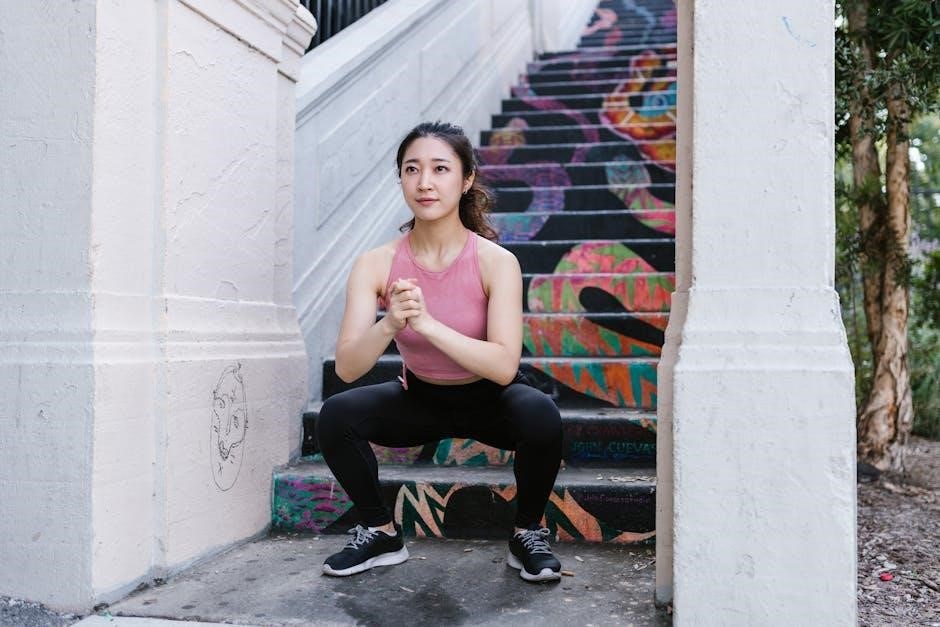
Kickstart your circuit with a lower body blast! This round emphasizes building strength and endurance in your legs and glutes, requiring no equipment․ Squats are fundamental, offering variations like jump squats for increased intensity․ Master proper technique – back straight, core engaged, and weight in your heels․
Lunges follow, targeting individual legs for improved balance and stability․ Incorporate forward, reverse, and even lateral lunges to challenge different muscle groups․ Focus on maintaining a 90-degree angle in both knees during each lunge․ Remember to alternate legs and control your descent․ This round sets a strong foundation for the rest of your 30-minute bodyweight workout․
Squats – Technique and Variations
Mastering the squat is crucial for lower body strength․ Begin with feet shoulder-width apart, toes slightly outward․ Lower your hips as if sitting in a chair, keeping your back straight and core engaged․ Ensure your knees track over your toes and don’t extend past them․ Variations amplify the challenge!
Jump squats add a plyometric element, boosting calorie burn and power․ Pulse squats increase time under tension, enhancing endurance; Sumo squats target inner thighs․ Proper form is paramount to prevent injury; prioritize controlled movements over speed․ A 30-minute bodyweight workout benefits greatly from correctly executed squats, building a solid foundation․
Lunges – Forward, Reverse, and Lateral
Lunges are fantastic for sculpting legs and glutes․ Forward lunges build strength and balance; step forward, lowering your back knee towards the ground while keeping your front knee aligned over your ankle․ Reverse lunges are gentler on the knees, stepping backward instead․ Lateral lunges target inner and outer thighs, stepping to the side․
Maintain a straight back and engaged core throughout each variation․ A 30-minute bodyweight workout PDF often incorporates lunges due to their versatility․ Focus on controlled movements and full range of motion․ Modify by shortening your stride if needed․ Remember, proper form prevents injury and maximizes results!
Round 2: Upper Body & Core
Transitioning into upper body and core work, this round builds strength and stability․ A 30-minute bodyweight workout PDF frequently includes exercises requiring no equipment, making it accessible anywhere․ Expect to challenge your chest, shoulders, triceps, and abdominal muscles․
Focus on maintaining proper form to maximize effectiveness and prevent injury․ Core engagement is crucial throughout each exercise․ This round complements the lower body work, creating a balanced, full-body routine․ Prepare for exercises like push-ups and planks, foundational movements for upper body and core strength․ Consistency is key to seeing results!
Push-Ups – Modifications for Beginners
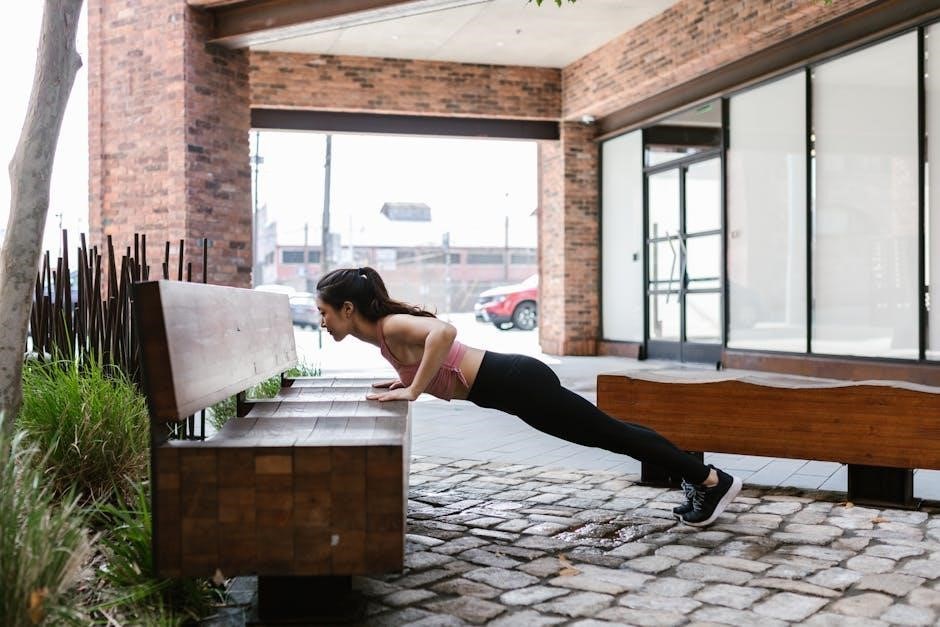
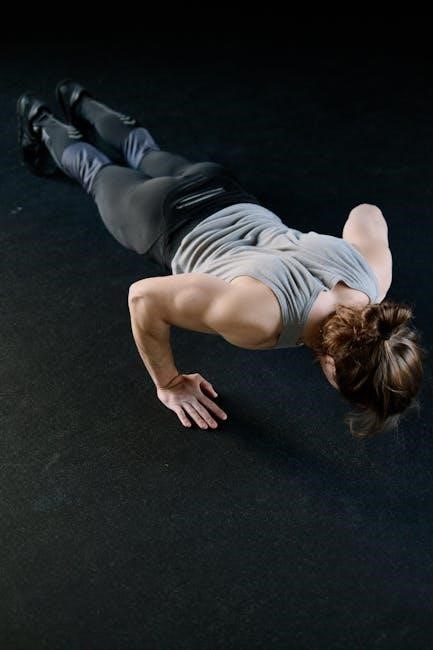
Push-ups are a cornerstone of upper body strength, but can be challenging for beginners․ A 30-minute bodyweight workout PDF often provides modifications to ensure accessibility for all fitness levels․ Start with knee push-ups, reducing the bodyweight load․ Alternatively, perform incline push-ups against a wall or elevated surface․
Focus on maintaining a straight line from head to knees (or toes) and controlled movements․ Gradually progress to standard push-ups as strength increases․ Proper form is paramount – avoid sagging hips or a rounded back․ Remember, consistency and gradual progression are more important than attempting too much too soon․
Plank – Proper Form and Variations
Planks are fantastic for core strength and stability, frequently featured in 30-minute bodyweight workout PDFs․ Proper form is crucial: maintain a straight line from head to heels, engaging your core, glutes, and shoulders․ Avoid sagging hips or lifting your back․ Begin with a forearm plank, holding for 30-60 seconds․
As you progress, explore variations like side planks to target obliques, or plank with shoulder taps for added challenge․ A PDF workout may demonstrate these․ Remember to breathe deeply throughout the exercise․ If you feel strain in your lower back, modify by dropping to your knees․
Round 3: Full Body Integration
Round three in a 30-minute bodyweight workout PDF focuses on combining strength and cardio for maximum calorie burn․ Expect exercises like burpees and mountain climbers, demanding full-body engagement․ These movements efficiently work multiple muscle groups simultaneously, enhancing overall fitness․
A typical PDF will guide you through each step, emphasizing proper form to prevent injury․ Burpees combine a squat, push-up, and jump, while mountain climbers mimic running in a plank position․ Aim for 10-15 repetitions of each exercise, completing 3-4 rounds with minimal rest․ This round builds endurance and power․
Burpees – Step-by-Step Guide
Burpees, a staple in many 30-minute bodyweight workout PDFs, are a full-body exercise demanding strength and endurance․ Begin in a standing position, then drop into a squat with hands on the floor․ Kick your feet back into a push-up position, perform a push-up, and return your feet to the squat․
Finally, explosively jump upwards, reaching your arms overhead․ A good PDF will break down each step visually․ Modifications include stepping instead of jumping or omitting the push-up for beginners․ Aim for controlled movements, focusing on form over speed․ Burpees effectively combine cardio and strength training, maximizing calorie expenditure․
Mountain Climbers – Engaging Core and Cardio
Mountain climbers, frequently featured in 30-minute bodyweight workout PDFs, are a dynamic exercise boosting both cardiovascular fitness and core strength․ Start in a plank position, hands shoulder-width apart․ Bring one knee towards your chest, then quickly alternate, mimicking a climbing motion․
Maintain a straight back and engaged core throughout the exercise․ A quality PDF will emphasize proper form to prevent lower back strain․ Modifications include slowing the pace or performing them on an incline․ This exercise effectively elevates your heart rate while simultaneously strengthening your abdominal muscles, making it a powerful addition to any routine․
Cool-Down (5 Minutes)
Essential for recovery, a 5-minute cool-down—detailed in your 30-minute bodyweight workout PDF—includes static stretches and breathing exercises to reduce muscle soreness․
Static Stretching – Holding Each Stretch
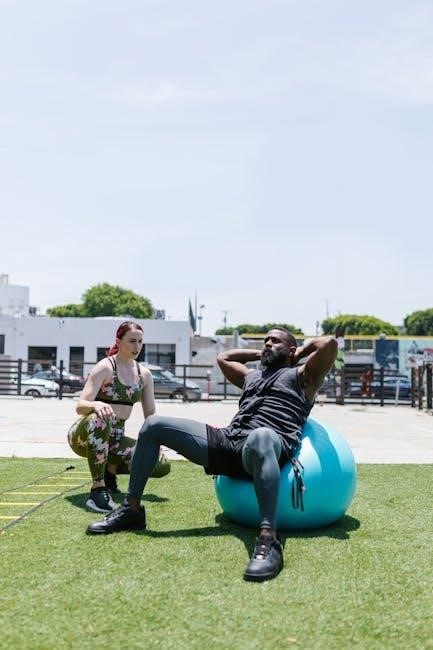
Following your workout, static stretching is crucial for improving flexibility and reducing muscle soreness, as outlined in your 30-minute bodyweight workout PDF․ Hold each stretch for 20-30 seconds, focusing on major muscle groups worked during the circuit․
Examples include hamstring stretches, quadriceps stretches, calf stretches, triceps stretches, and shoulder stretches․ Remember to breathe deeply and avoid bouncing, aiming for a gentle pull, not pain․
This phase allows muscles to lengthen and recover, enhancing range of motion and preventing stiffness․ Consistent static stretching, guided by the PDF, contributes to long-term fitness and injury prevention․ Prioritize proper form over depth to maximize benefits and minimize risk․
Breathing Exercises for Recovery
Complement your 30-minute bodyweight workout PDF’s cool-down with focused breathing exercises to accelerate recovery․ Deep, diaphragmatic breathing helps lower your heart rate and calm your nervous system, promoting relaxation․
Try box breathing – inhale for four seconds, hold for four, exhale for four, and hold again for four․ Repeat several times․ Alternatively, practice mindful breathing, simply observing the sensation of each inhale and exhale․
These techniques increase oxygen delivery to muscles, aiding in repair and reducing post-workout fatigue․ Incorporating breathing exercises, as suggested in the PDF, enhances the overall effectiveness of your routine and supports holistic well-being․

Downloading Your 30-Minute Bodyweight Workout PDF
Access step-by-step instructions and tailored examples with a free 30-minute bodyweight workout PDF, perfect for beginners and experienced fitness enthusiasts alike!
What to Expect in the PDF
Within the downloadable 30-minute bodyweight workout PDF, anticipate a comprehensive guide designed to maximize your at-home fitness journey․ You’ll find detailed, step-by-step instructions for each exercise, ensuring proper form and technique․ Expect clear visual examples, making it easy to follow along, regardless of your current fitness level․
The PDF is structured to provide a complete workout experience, from warm-up routines to cool-down stretches․ It outlines a circuit-style workout, focusing on lower body, upper body & core, and full-body integration․ You’ll discover modifications for beginners, allowing you to scale the intensity to your capabilities․ The goal is to help you sculpt your dream physique efficiently and effectively, all without requiring any specialized equipment․ Prepare to sweat and feel empowered!
Customizing the Workout to Your Level
The beauty of a bodyweight workout PDF lies in its adaptability․ Beginners can start with fewer repetitions or modify exercises – for example, performing push-ups on their knees․ As strength increases, gradually increase reps, sets, or choose more challenging variations․
Intermediate and advanced users can explore advanced modifications, like plyometric exercises, to elevate the intensity․ The PDF supports progression, encouraging you to push beyond limits safely․ Remember, consistency is key! Adjust the workout based on your body’s feedback, prioritizing proper form over speed․ This ensures a safe and effective routine tailored to your individual fitness journey, maximizing results and preventing injury․
Progression and Modifications
Gradually increase difficulty over time by adding reps, sets, or harder variations․ Adapt exercises if you have injuries, prioritizing safe and effective movement․

Increasing Difficulty Over Time
As your strength and endurance improve, it’s crucial to challenge yourself to continue seeing results with your 30-minute bodyweight workout․ Several methods can be employed to progressively overload your muscles․ Begin by increasing the number of repetitions for each exercise․ Once you can comfortably perform a higher rep range, consider adding more sets to your circuit․
Another effective technique is to reduce the rest time between exercises and rounds, boosting the cardiovascular demand․ Explore more challenging variations of each exercise; for example, progress from knee push-ups to standard push-ups, or from regular squats to jump squats․ Incorporating tempo changes – slowing down the eccentric (lowering) phase – can also heighten the intensity․ Remember to prioritize proper form throughout these progressions to prevent injury and maximize effectiveness․
Adapting Exercises for Injuries
If you’re navigating an injury, modifying your 30-minute bodyweight workout is essential for continued progress without exacerbating the issue․ Prioritize listening to your body and avoiding any movements that cause pain․ For knee problems, reduce squat depth or substitute with wall sits․ Shoulder injuries may necessitate modified push-up positions – against a wall or on your knees – or complete avoidance․
Core exercises can often be adapted; for example, performing planks on your forearms instead of hands․ Consider lower-impact alternatives like bird-dogs instead of mountain climbers․ Consulting with a physical therapist or healthcare professional is highly recommended to receive personalized guidance and ensure safe exercise modifications tailored to your specific injury and recovery stage․
Safety Considerations
Prioritize proper form during your 30-minute bodyweight workout to prevent injuries․ Always listen to your body, and stop if you experience any pain․
Proper Form to Prevent Injury
Maintaining correct form is paramount during your 30-minute bodyweight workout․ Incorrect technique can lead to strains, sprains, or more serious injuries․ Focus on controlled movements, engaging your core throughout each exercise․ For squats, ensure your knees track over your toes and your back remains straight․
During push-ups, keep your body in a straight line from head to heels․ When performing lunges, avoid letting your front knee extend past your toes; Prioritize quality over quantity; it’s better to do fewer repetitions with perfect form than many with poor technique․ If you’re unsure about proper form, consult online resources or a fitness professional before starting․
Listening to Your Body
Your body provides crucial feedback during any workout, especially a 30-minute bodyweight routine; Pay attention to signals of pain or discomfort․ Sharp, sudden pain indicates a potential injury and requires immediate cessation of the exercise․ Muscle soreness is normal, but it shouldn’t be debilitating․
Don’t push through pain; modify the exercise or take a break․ Rest when needed, and stay hydrated throughout your workout․ Adjust the intensity and duration based on your fitness level and how you feel on any given day․ Respect your limits and remember that consistency, not intensity, is key to long-term progress․ Prioritize recovery to prevent overtraining․