Math Olympiad Questions with Solutions PDF: A Comprehensive Guide
Navigating the world of mathematical competitions requires dedicated practice. Accessing past papers in PDF format, alongside detailed solutions, is crucial for effective preparation and skill enhancement.
What is the International Mathematical Olympiad (IMO)?
The International Mathematical Olympiad (IMO) is a prestigious annual competition for high school students, representing a pinnacle of achievement in mathematics. It’s a globally recognized event, pitting the brightest young minds against each other in a challenging display of problem-solving prowess. The competition isn’t simply about rote memorization; it demands creativity, logical reasoning, and a deep understanding of mathematical principles.
Each participating country sends a team of up to six students, selected through rigorous national competitions. The IMO problems themselves are notoriously difficult, often requiring innovative approaches and a blend of different mathematical fields – number theory, algebra, geometry, and combinatorics. The focus is on elegant solutions and demonstrating mathematical maturity.
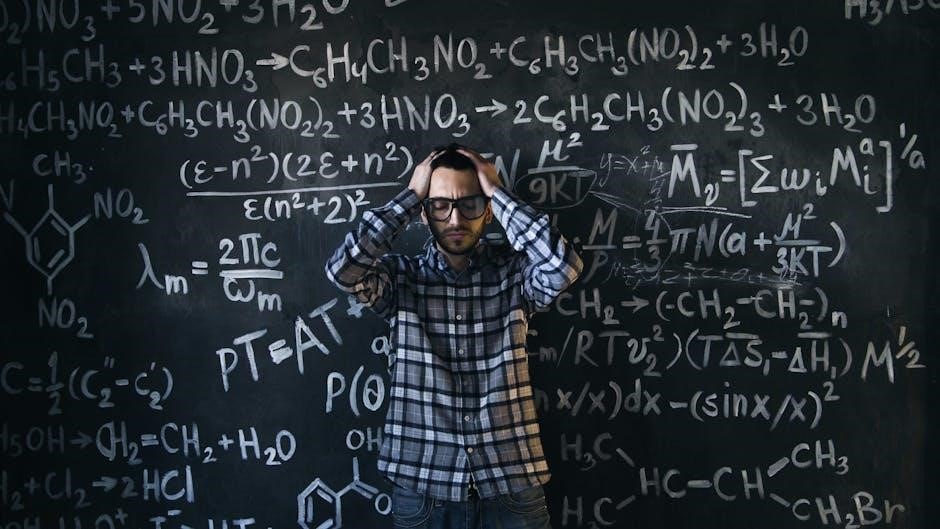
Recently, the IMO has become a testing ground for Artificial Intelligence, with systems like Google DeepMind’s AlphaGeometry achieving impressive results, even matching silver medal standards. This highlights the complexity and depth of the problems presented, and the ongoing evolution of both human and artificial intelligence in tackling them.
History and Evolution of the IMO
The International Mathematical Olympiad’s origins trace back to the Cold War era, with the first competition held in Romania in 1959. Initially, it was primarily a contest between Eastern European countries, aiming to foster collaboration and intellectual exchange amidst political tensions. However, it quickly expanded, welcoming participation from nations across the globe.
Over the decades, the IMO has evolved significantly, adapting to changing pedagogical approaches and mathematical advancements. The problem-setting process has become increasingly sophisticated, ensuring a balance of difficulty and originality. The format has remained largely consistent – individual problems solved over two competition days – but the scope and depth of the mathematical concepts tested have broadened.
The recent emergence of AI, like Google DeepMind’s AlphaGeometry, marks a new chapter in the IMO’s history. While initially a purely human endeavor, the competition now serves as a benchmark for artificial intelligence capabilities in complex mathematical reasoning, prompting discussions about the future of problem-solving.
The Difficulty Level of IMO Problems
IMO problems are renowned for their exceptional difficulty, far exceeding the standard curriculum of even the most advanced high school mathematics students. They demand not just computational skills, but also deep conceptual understanding, creative problem-solving abilities, and a knack for elegant proofs. Problems aren’t designed for rote application of formulas; they require innovative thinking.
The six problems presented across two competition days are carefully calibrated, with the first few generally being more accessible, while the later ones pose significant challenges. Achieving a perfect score is exceedingly rare, and even a bronze medal requires substantial mathematical prowess.
The introduction of AI systems like AlphaGeometry highlights this difficulty, as achieving a silver-medal level performance demonstrates a significant leap in artificial intelligence. Successfully tackling these problems necessitates a mastery of number theory, geometry, combinatorics, and algebra, often requiring interdisciplinary approaches.
Types of Math Olympiad Questions
IMO problems broadly fall into four core categories: Number Theory, Geometry, Combinatorics, and Algebra. Number Theory questions often involve properties of integers, divisibility, prime numbers, and Diophantine equations. Geometry problems test spatial reasoning, triangle properties, circle theorems, and synthetic geometry techniques.
Combinatorics focuses on counting principles, permutations, combinations, and graph theory, demanding logical deduction and pattern recognition. Algebra problems explore polynomial equations, inequalities, functional equations, and abstract algebraic structures.
However, many problems are interdisciplinary, requiring a blend of these areas. For instance, a geometry problem might necessitate algebraic manipulation or combinatorial reasoning. The recent advancements in AI, like Google DeepMind’s AlphaGeometry, demonstrate a focus on excelling in Geometry, showcasing the complexity within this specific type. Mastering all four types is essential for success.
Number Theory Problems
Number Theory problems in Math Olympiads frequently center around the properties of integers. These can involve divisibility rules, prime factorization, modular arithmetic, and Diophantine equations – equations where only integer solutions are sought. Expect questions testing your understanding of greatest common divisors (GCD) and least common multiples (LCM).
A common approach involves clever manipulation of congruences and utilizing the fundamental theorem of arithmetic. Problems often require proving statements about integers or finding specific integer solutions. Past papers in PDF format are invaluable for recognizing recurring patterns and problem-solving techniques.
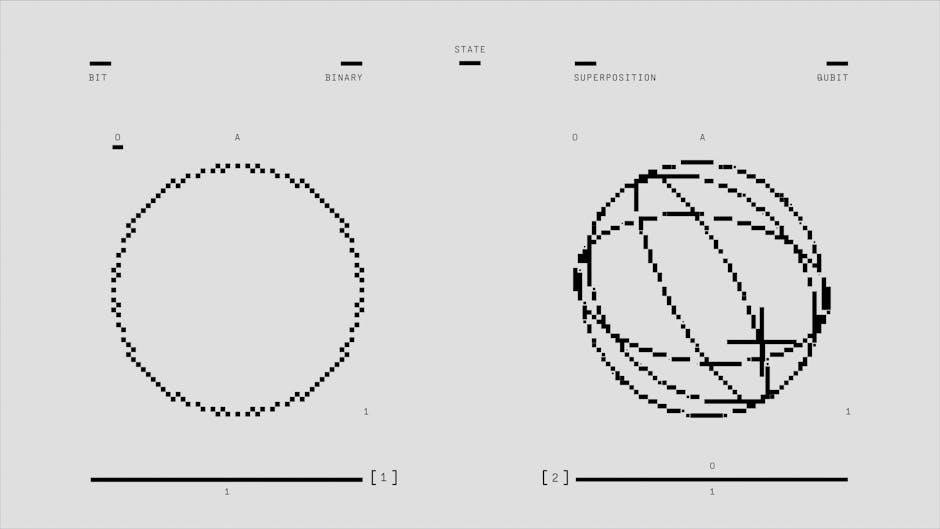
Successfully tackling these problems demands a strong foundation in basic number theory concepts and the ability to apply them creatively. The challenge lies in transforming seemingly complex problems into manageable, logical steps.
Geometry Problems
Geometry problems in Math Olympiads often demand more than just recalling formulas. They frequently require a deep understanding of geometric principles, spatial reasoning, and the ability to construct elegant proofs. Expect challenges involving triangles, circles, quadrilaterals, and solid geometry.
Key techniques include angle chasing, similar triangles, and the application of theorems like Pythagoras and Ceva’s theorem. Diagrams are crucial; accurate sketches can often reveal hidden relationships and guide your solution. PDF resources with solutions demonstrate how to approach these visually-oriented problems.
Mastering geometry requires practice in visualizing shapes and their properties; Developing a systematic approach to problem-solving, combined with a solid grasp of geometric theorems, is essential for success.
Combinatorics Problems
Combinatorics focuses on counting, arrangement, and selection of objects. Math Olympiad combinatorics problems often involve permutations, combinations, and the principle of inclusion-exclusion. These problems test your logical thinking and ability to identify patterns. Expect scenarios involving arrangements, selections, and distributions.
Understanding fundamental counting principles is vital. Techniques like generating functions and recurrence relations can be powerful tools for tackling complex combinatorics challenges. PDF resources with detailed solutions illustrate how to apply these techniques effectively.
Careful consideration of constraints and avoiding overcounting are crucial. Developing a systematic approach to counting and recognizing symmetries can significantly simplify problem-solving. Practice with diverse problems builds intuition and problem-solving skills.
Algebra Problems
Algebra in Math Olympiads extends beyond typical equation solving. Expect problems involving polynomial factorization, functional equations, and inequalities. A strong foundation in algebraic manipulation is essential, alongside creative problem-solving skills. PDFs containing solutions often demonstrate elegant approaches to these challenges.
Mastering techniques like Vieta’s formulas and AM-GM inequality is beneficial. Functional equations require identifying patterns and constructing solutions, while inequalities demand clever manipulation and bounding.
Developing a strong understanding of algebraic identities and properties is key. Practice with a wide range of problems builds proficiency and intuition. Detailed solution PDFs provide valuable insights into different problem-solving strategies and common pitfalls.
Where to Find Math Olympiad Questions with Solutions in PDF Format
Locating past Math Olympiad papers in PDF format is vital for effective preparation. Numerous online resources offer collections of problems and their corresponding solutions. Websites dedicated to mathematical competitions frequently archive past papers, making them readily accessible for download.
Official IMO websites are excellent starting points, providing access to official past papers and solutions. Additionally, various mathematical communities and forums curate collections of problems from different Olympiads. Searching for “IMO past papers PDF” will yield a wealth of results.
Remember to verify the source’s credibility to ensure the accuracy of the solutions. Many educational institutions and organizations also offer PDFs containing practice problems and solutions. Utilizing these resources strategically will significantly enhance your preparation.
Popular Websites Offering IMO Past Papers
Several websites specialize in providing access to International Mathematical Olympiad (IMO) past papers. Art of Problem Solving (AoPS) is a highly regarded platform, offering a vast collection of problems, solutions, and community forums for discussion. AoPS hosts numerous past papers in PDF format, categorized by year and difficulty.
The official IMO website (imo-official.org) is a primary source, providing official past papers and results. Other valuable resources include websites dedicated to national Olympiads, which often feature past papers used in their respective competitions.
CutTheKnot.org is another excellent resource, offering a diverse range of mathematical problems and interactive explorations. These platforms frequently offer downloadable PDFs, making it convenient to study offline. Remember to cross-reference solutions and explore different resources for a comprehensive understanding.
Benefits of Solving Past IMO Papers
Engaging with past International Mathematical Olympiad (IMO) papers offers substantial benefits for aspiring contestants. Solving these problems cultivates critical thinking, problem-solving skills, and mathematical intuition. Exposure to diverse problem types – number theory, geometry, combinatorics, and algebra – broadens your mathematical horizons.
Analyzing solutions reveals elegant techniques and strategies employed by high-achieving mathematicians. This process enhances your understanding of core concepts and improves your ability to approach unfamiliar problems. Working through past papers builds confidence and familiarizes you with the competition format.
Furthermore, identifying your weaknesses allows for targeted practice. Consistent effort with past papers significantly increases your chances of success in future competitions, fostering a deeper appreciation for mathematical challenges.
Strategies for Tackling Challenging Math Olympiad Problems
Successfully navigating complex IMO problems demands a strategic approach. Begin by thoroughly understanding the problem statement, identifying key information, and exploring potential avenues for solution. Don’t immediately jump into calculations; consider simpler cases or analogous problems to gain insight.
Employ problem-solving techniques like working backwards, considering extreme values, or utilizing symmetry. Break down complex problems into smaller, manageable subproblems. If stuck, explore alternative approaches or temporarily set the problem aside to return with a fresh perspective.
Utilizing past papers with solutions is invaluable. Analyze successful strategies employed by others, and learn from your mistakes. Persistence and a willingness to experiment are crucial for overcoming challenging mathematical hurdles.
The Role of AI in Solving IMO Problems (Google DeepMind’s AlphaGeometry)
Recent advancements showcase Artificial Intelligence’s growing capability in tackling complex mathematical challenges, notably demonstrated by Google DeepMind’s AlphaGeometry. This AI system leverages neural networks and symbolic reasoning to approach geometry problems at a level comparable to human contestants.
AlphaGeometry’s success highlights a shift in AI problem-solving, moving beyond brute-force computation towards more intuitive and strategic thinking. Access to comprehensive datasets of past IMO problems and their solutions was crucial in training the AI.
The development signifies a potential tool for students, offering new perspectives and solution approaches. However, it also raises questions about the future of mathematical competitions and the role of human ingenuity. Analyzing AlphaGeometry’s methods can provide valuable insights for improving problem-solving skills.
AI Performance Compared to Human Contestants
Currently, AI like Google DeepMind’s AlphaGeometry demonstrates impressive, yet not flawless, performance in IMO-level problems. It achieved a silver medalist standard by solving four out of six problems from a recent Olympiad, showcasing significant progress. However, consistently matching or surpassing top human contestants remains a challenge.
Human competitors often exhibit creativity and intuition that are difficult for AI to replicate, especially in novel problem scenarios. Access to a vast library of solved problems, like those found in PDF collections, aids both AI training and human preparation, but doesn’t guarantee success.
AI excels at rigorous deduction and pattern recognition, while humans can leverage broader mathematical knowledge and strategic thinking. The comparison underscores the complementary strengths of both approaches, potentially leading to collaborative problem-solving in the future.
Resources for Training and Preparation
Effective preparation for Math Olympiads relies on a diverse range of resources. Utilizing Math Olympiad questions with solutions in PDF format is a cornerstone of this process, providing ample practice material and insight into problem-solving techniques.
Numerous websites offer past IMO papers and national competition problems, often freely available for download. Supplementing these with recommended textbooks – covering number theory, geometry, combinatorics, and algebra – builds a strong theoretical foundation.
Online courses and tutorials, often led by experienced coaches, provide structured learning and personalized guidance. Participating in math circles and competitions offers valuable experience and exposure to challenging problems. Consistent practice with PDF resources is key to success.
Recommended Books for Math Olympiad Preparation
A solid library is essential for aspiring Math Olympiad participants. Books offering Math Olympiad questions with solutions in PDF format (or accompanying solutions) are invaluable for self-study and practice. “Art and Craft of Problem Solving” by Paul Zeitz is a classic, focusing on problem-solving strategies.
For number theory, “Number Theory for Beginners” by Andre Weil provides a strong foundation. Geometry enthusiasts should explore “Geometry Revisited” by Coxeter and Greitzer, while “Combinatorial Problems and Exercises” by László Lovász is excellent for combinatorics.
“Putnam and Beyond” offers challenging problems and solutions, bridging the gap to higher-level competitions. Supplementing these with collections of past IMO problems and their solutions, often available in PDF compilations, is highly recommended for comprehensive preparation.
Online Courses and Tutorials
The digital age offers a wealth of resources for Math Olympiad preparation, often complementing PDF problem sets. Platforms like Art of Problem Solving (AoPS) provide comprehensive courses, forums, and Math Olympiad questions with solutions, fostering a collaborative learning environment.
Khan Academy offers foundational math skills, crucial for building a strong base. Brilliant;org presents interactive problem-solving challenges, enhancing conceptual understanding. Many universities also offer online courses, sometimes with recorded lectures and practice problems.
YouTube channels dedicated to mathematical problem-solving provide valuable insights and techniques. Searching for specific topics, like “IMO geometry tutorials,” yields numerous helpful videos. Utilizing these resources alongside PDF practice materials maximizes learning and improves problem-solving speed and accuracy.
The Future of Math Olympiads and AI
The emergence of AI, like Google DeepMind’s AlphaGeometry, is reshaping the landscape of mathematical problem-solving and, consequently, Math Olympiads. While currently focused on geometry, AI’s capabilities are rapidly expanding, potentially impacting all areas covered in Math Olympiad questions with solutions PDF.
The role of human ingenuity will likely evolve. Instead of solely focusing on computational skills, contestants may need to demonstrate creativity, intuition, and the ability to guide AI tools effectively. Competitions might incorporate AI assistance, testing a student’s ability to collaborate with these systems.
Access to vast databases of past papers and solutions in PDF format will become even more critical for training AI and understanding its limitations. The future may see AI-powered personalized learning platforms tailored to individual Olympiad preparation needs.
Impact of AI on Mathematical Problem Solving
AI’s advancements, exemplified by AlphaGeometry, demonstrate a paradigm shift in tackling complex mathematical challenges. Previously requiring extensive human effort, solving intricate problems found in Math Olympiad questions with solutions PDF is now becoming increasingly automated.
This doesn’t diminish the value of human mathematical thinking but rather augments it. AI excels at computation and pattern recognition, while humans retain strengths in abstract reasoning and creative problem formulation. The availability of solved problems in PDF format aids in training these AI models.

AI can accelerate the discovery of new mathematical insights and techniques. By analyzing vast datasets of problems and solutions, AI can identify novel approaches and potentially uncover previously unknown theorems. This impacts how we approach and learn from resources like Olympiad past papers.
Ethical Considerations of AI in Competitions
The integration of AI, capable of solving problems from Math Olympiad questions with solutions PDF, raises significant ethical concerns within competitive environments. Allowing AI assistance fundamentally alters the nature of these contests, designed to assess human ingenuity and problem-solving skills.
Questions arise regarding fairness and authenticity. If AI can generate solutions, how do we ensure contestants are genuinely demonstrating their own understanding? Strict regulations and proctoring become paramount, yet circumventing these measures remains a challenge.
Furthermore, the accessibility of such AI tools creates disparities. Students with access to advanced AI may gain an unfair advantage over those without, exacerbating existing inequalities. A thoughtful discussion is needed to define the appropriate role of AI in mathematical competitions, preserving their integrity and educational value.